Saturday, January 12, 2013

Thoughts on national identity

Last week Katy Meyers over at Bones Don't Lie posted an entry I found thought-provoking.  It was excellent.  Go read it.  In her article she discussed the difficulties involved in identifying the ethnicity of an excavated skeleton. Archaeologists can examine ethnicity by studying cranial features, isotope ratios, and grave goods.  However, these are all imprecise.  Katy concluded by writing, "Perhaps the more important question isn't trying to identify barbarian groups, but rather to look at the integral change in cemeteries and how individuals expressed identity on a more local scale."
An English child celebrates St. George's Day 2010.
From Wikimedia Commons.

Katy's post interested me because I have been thinking lately about something similar.  I have been wondering about how individual early medieval people formed their national identities.  I originally got to thinking about national identity while watching the Olympic Games in London.  What makes an athlete or a spectator identify themselves as, for example, British?  I then started thinking about people who lived in England during the medieval period.  When did these people start seeing themselves as primarily English instead of as primarily members of their Germanic or Celtic tribe, and why did this happen?  Further, when medieval people established a consistent national identity from Scotland to Wales and Cornwall, why did they see themselves as "English" instead of "Saxon" or "Mercian" or even "Viking?"

The Olympics were several months ago, and I haven't yet found an answer to these questions that I find satisfying.  I begin to suspect that my lack of good answers is partially because there aren't any good answers to be had.  This may be one of those instances where our modern ways of thinking are sufficiently different from how people thought 1000 years ago; that we're not going to be able to understand exactly what was going through their minds unless we can borrow the TARDIS and ask them.

That said, I have found a couple of hints.

I've learned that the Anglo-Saxon legal system sometimes favored people of an English nationality.  For example, Ine's law established a higher weregild and lower burden of proof for Anglo-Saxons then for Britons (see Ward-Perkins).  People who lived under a tiered legal system that favored the English would have had an incentive to label themselves as English.

I've also come to the conclusion that religion played a role.  An obvious difference between the English and the Norse was their different religions.  There must have been something about Christianity that medieval people found compelling:  the pagan Vikings converted to Christianity within one or two generations of settling in Northumbria (see citation).  If Northumbrians saw the term "English" as being synonymous with "Christian" than calling themselves English would have followed conversion.

A person's national identity is influenced by a number of things.  This is true today, and I guess I shouldn't be surprised that it is equally difficult to understand the national identity of medieval people.  I will continue to learn about and think about this, but I will probably stop looking for an easy, direct answer.

Works cited:
Ward-Perkins, Bryan.  Why did the Anglo-Saxons not become more British?  English Historical Review (Oxford University Press), June 2000.


Thursday, December 27, 2012

History-envy

Living where I do, I sometimes envy people who live places where they are surrounded by history.  Salt Lake City does a good job of preserving the history of what is available, but the fact is that the city was not founded until 1847, so there is not a whole lot to work with.  The oldest surviving buildings are only about 150 years old, which is downright modern from a world history, or a western history perspective.

I remember, two years ago, exploring Segovia with my spouse.  We had spent the afternoon wandering through the Castilian alcazar, walking along medieval city walls, and ogling at Romanesque churches.  That evening, standing under the Roman aqueducts, I watched the locals dar paseos through the town where they lived their lives.  I asked my husband, do you think these people appreciate the history around them?  I mean, I can reach out and touch stones placed on top of each other by people who lived two thousand years ago.  Do the locals see it?  Do they know what they have?

Beneath the Roman aqueducts in Segovia, Spain
I have history-envy.  I need to go back.

In the meantime, I see the objects that go on exhibit at the museums along the Wasatch Front.  Certainly I can (and do) read a lot of books and articles and look at a lot of pictures, but there is something different about being physically present with the actual object.

As an example, last month I saw an exhibition of medieval English alabasters at Brigham Young University's Museum of Art.  Now, I have read enough about medieval religious images to know that during the middle ages depictions of religious events and figures followed a basic iconography, making the stories and people in the art easily recognizable to the viewer.  It was standing in a room full of religious art, however, where I really understood how alike these medieval depictions actually were.  I walked back and forth between two carvings of the beheading of John the Baptist, then between three carvings of Christ rising from the tomb, and then between depictions of the Trinity, checking out the similarities.  When I realized that I could distinguish God the Father from God the Son in all the carvings of the Trinity I was so excited that I turned to the group of people standing next to me and pointed it out, which was probably quite rude as I didn't know them and as they likely didn't care that God the Father was always holding a world orb, but I was so thrilled to have learned this that I had to share it with somebody, and they just happened to be next to me when my learning bubbled over.

Anyway, other people probably daydream about climbing Mt. Kilimanjaro, hiking through the Amazon, or lying on beaches in Hawaii.  Me, I wish I could examine the Staffordshire hoard, stand inside the Sistine Chapel, or read the signatures on the engrossed US Declaration of Independence.  History-envy.  

Wednesday, November 7, 2012

This blog is not yet dead

As mentioned in a previous post, I now have a son in middle school.  The transition has been difficult; he feels crushed under the heavier workload and he cannot quite juggle all the new expectations thrown his way.    My husband and I have been helping him adjust, and all 3 of us finally begin to see improvement.  The consequence, though, is that we have not spent as much time on our other priorities, such as blogging.

Last week began a new quarter, however.  My son is making progress.  He's had an abrupt shift in the way he looks at the world and at himself, and it has been a struggle for him to deal with it, but I think he's going to be stronger for it in the end.

So where does this leave the blog?  Well, I have several drafts in the queue which I hope to publish in the next few weeks as my son continues to master his study habits.  These drafts include notes on articles I read, classes I taught, and museum exhibits I toured.  Meantime, I will end this post with a bit of etymology I picked up while learning about the Anglo-Saxon economic system:

The term for a particular class of peasant working on a manor farm was gebur.  A gebur was a freeman, so he could not be sold to another person.  His services could, however, be transferred with the property worked if that property was sold.  The gebur who lived close-by to an individual was called the individual's near-gebur, in old english neah-gebur, in modern english neighbor.

Wednesday, June 27, 2012

School days, school days . . .

The school year is just finishing up in here in the Jordan School District.  The year-round elementary school my children attend will be in session one more week, then people in my family are off to vacations, campouts, and *gasp* junior high.

I volunteered at the elementary school again this year, mostly in the first and sixth grade classrooms.  I always wonder what the kids in the class think about the extra adult in the room.  I remember when I was an elementary school student, that the reading groups were led by an adult (usually female) who came to the classroom expressly for that purpose.  In retrospect, these adults were probably parent volunteers.  As a child, though, I had just a vague idea that these women were extra teachers from somewhere.

Anyway, with school year endings and beginnings on everybody's minds around here, I thought I'd post something about education in the middle ages.

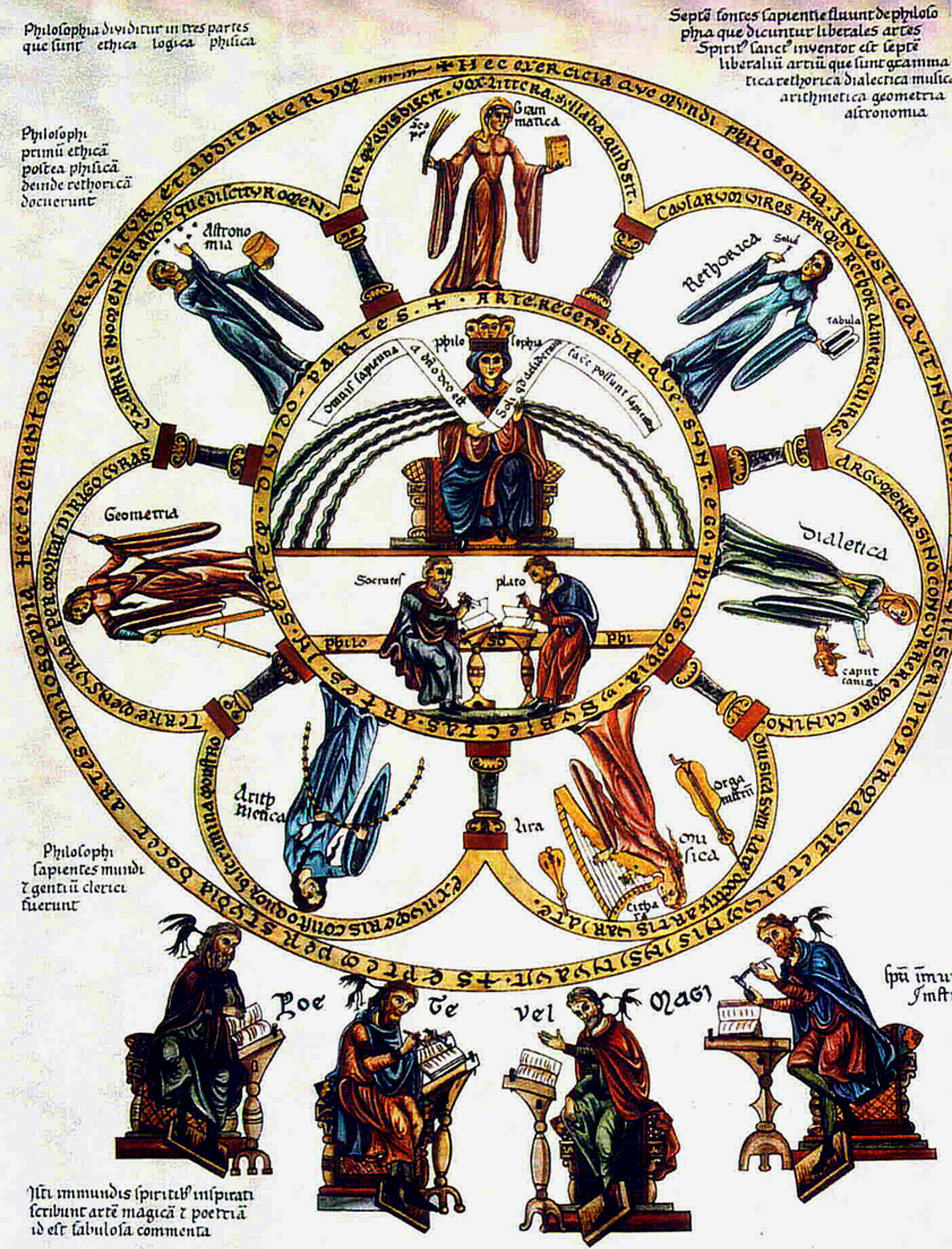
My kids and their classmates spent the year learning the 3 R's:  reading, 'riting, and 'rithmatic.  Medieval scholars' educations were built around the 7 liberal arts:  Grammar, Logic, Rhetoric, Arithmetic, Geometry, Music, and Astronomy.

Grammar.  Specifically, medieval students needed to learn Latin grammar.  Latin was the international language of the middle ages.  Textbooks were written in Latin, lectures spoken in Latin, and dissertations argued in Latin.  For a look at a Modern English translation of a 10th century grammar text, see Aelfric's Colloquy.

Logic.  Grammar was learning to understand.  Logic (or dialectic) was learning how to think.  Popular works of logic studied in the middle ages included Boethius' Consolation of Philosophy and various works of Aristotle.

Rhetoric.  Rhetoric was the study of communication.  Scholars learned rhetoric to better use the skills gained while studying Grammar and Logic.  Students read Cicero, Augustine, and Bede.
The Seven Liberal Arts surrounding Philosophy,
 as illustrated in the 11th-cent. manuscript Hortus deliciarum.
Image courtesy Wikimedia commons.
Note the scholars underneath the Arts.

Grammar, logic, and rhetoric made up the trivium.  Many medieval universities awarded their lowest degrees to scholars who had mastered the trivium.  These scholars were then called bachelors.  The rest of the liberal arts constituted the quadrivium.

Arithmetic.  Today when students learn arithmetic they learn addition, subtraction, multiplication, and division.  In the middle ages arithmetic referred to number theory.  It also encompassed the symbolism of number.  For example, seven symbolized perfection because it was the number of the days of the week and the number of visible planetary bodies.  Three referred to the Godhead.

Geometry.  The works of Euclid were known throughout the middle ages.

Music.  Like arithmetic, music referred to music theory, not to the practical knowledge of learning an instrument or voice.

Astronomy.  Ptolomy's writings on astronomy survived into the middle ages, and medieval astronomers based their understanding of the universe on Ptolomy's models.  Like Ptolomy, medieval thinkers believed that the Earth was the center of the universe.  Like Ptolomy, the medieval astronomer combined astronomy with astrology.

Upon his studying all 7 liberal arts and defending an oral dissertation, the university awarded the student the degree of Master of Arts.  The master could then apply for a teaching licence or continue studying at the university to become a doctor of law, of theology, of medicine, or of philosophy.


Sunday, June 10, 2012

English Benedictine Reform, part I

Alternate title:  Socrates was right, and it's aggravating.

The story goes that Socrates was wise because he understood how little he really knew.  I find something similar--the more I learn the more I discover how little I have yet to learn.

For example, I have lately been learning about the Benedictine Reform movement that took place in Anglo-Saxon England around the tenth century.  I spent two weeks of my spare time, roughly, gathering information, only to feel as if I must find much, much more to really grasp what occurred and what the implications were for Anglo-Saxon church and state.  Briefly, here is what I've managed to glean so far:

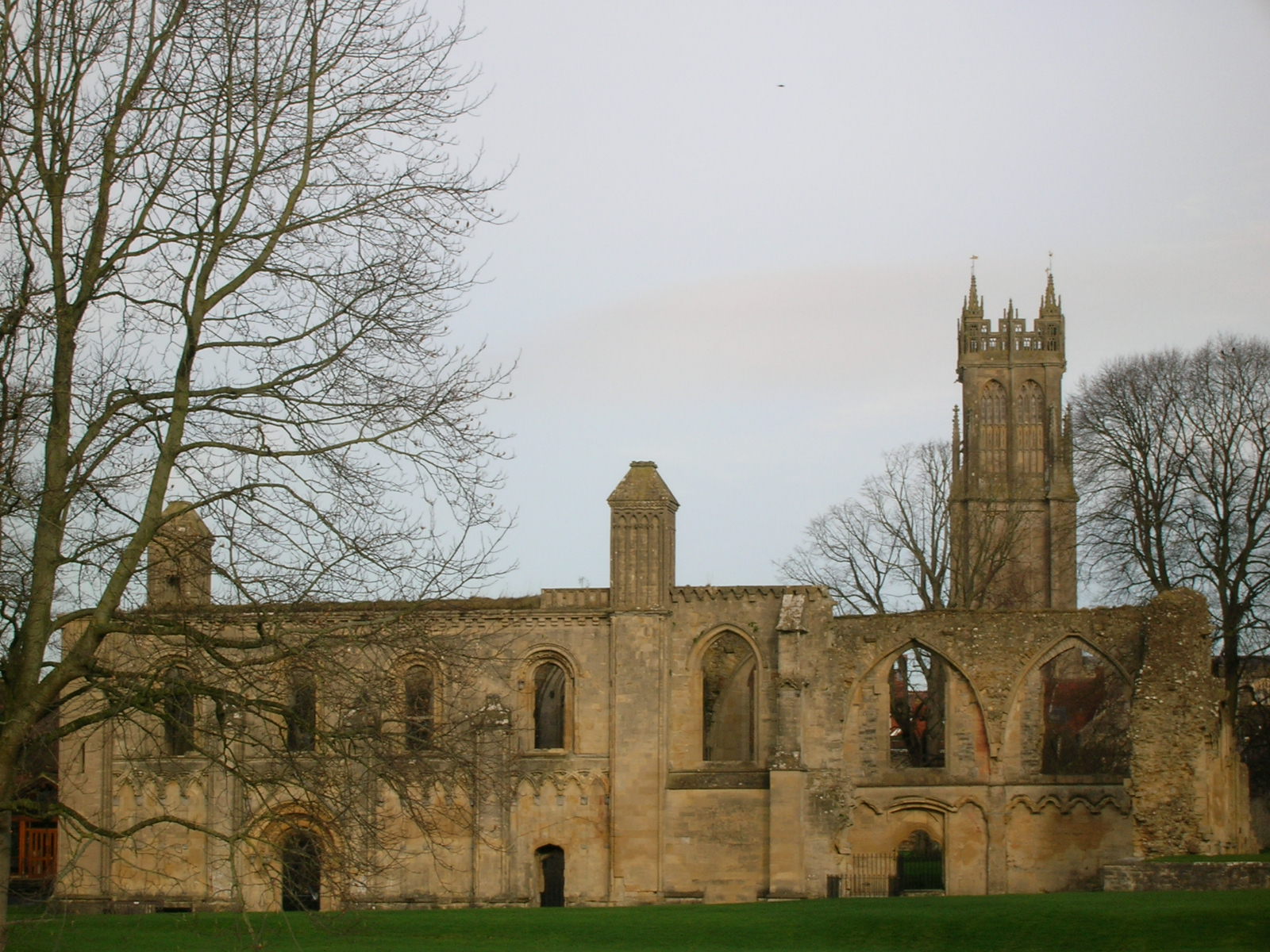
Glastonbury Abbey.
Photographed by Tony Grist. Courtesy Wikimedia Commons.
St. Dunstan, an advocate of Benedictine Reform was abbot here
(though not this particular building, which was constructed later).

First, the Benedictine Reform loosened the ties of the clergy and the clan.  For example, Anglo-Saxon priests frequently married and had families.  The Benedictine Reform eventually ended the practice.

Second, many abbeys had previously been under the jurisdiction of the local aristocracy; the Reform led to more independence.

Third, the effect of the above two points was to strengthen the position of the king and increase royal power.

More information to follow as I continue to figure this out.

Incidentally, Wikipedia (for what it's worth) says "historians continue to debate the extent and significance of this movement"  (See the entry Edward the Peaceful).  This makes me feel a bit better about my inability to wrap my brain around the topic.

Thursday, May 24, 2012

More Anglo-Saxon thoughts, and what I want to learn next

The bad part about having strep throat is, well, strep throat.  The best part about having strep throat is that, while contagious, everybody left me alone so I had lots of time to read.  I finished The Anglo-Saxons edited by James Campbell.  I learned a lot more than can be mentioned in just one blog post, so I'll mention only the things I learned pertaining to Anglo-Saxon England overall.

First, contact with the Continent, particularly France, was much greater than I had realized.  I knew Anglo-Saxon England had contact with Scandinavia through the vikings, and Rome through the Church.  Somehow I'd  missed the large amount of influence England and France had on each other at this time.  Carolingian France influenced English politics, law, art, religion, and commerce.  Toward the time of the Conquest,
England developed strong ties with Normandy.  Queen Emma was a Norman!  How could I have not known this?  The relationship between England and Normandy must have been important to the events leading up to the Norman invasion.  I want to read a biography of Queen Emma, at least a translation of her Encomium, to understand this better.  I also want to learn more about Cnut's reign.  What were the differences between his rule and Duke William's?  Why did the Norman rule stick, while the Danish rule ended in a generation?

Second, the early medieval English economy was quite well developed.  Coins were widely available and in circulation.  I should keep an eye out for more information on Anglo-Saxon coin distribution and its implications on their economy.

Third, the early medieval church in England had a different flavor than the early medieval church in Rome.  While I don't agree with those who hold that the modern Church of England has its roots in Anglo-Saxon Christianity, it does seem to me that the Church in England differed in some ways from the Church in Rome in response to the Anglo-Saxons' Germanic culture. I would like to learn more about the history of early Christianity in England and in Italy to get a better sense of the similarities and differences.

Wednesday, May 9, 2012

On neutrality in writing history

All scholars make assumptions in their writing, but good writers will lay out their assumptions at the outset and then will present information in as unbiased a manner as possible.  When I read an account of a historical event, I expect the historian to put aside the historian's own values and look at the event from the point of view of the people who lived it.  I also expect the historian to address more than one side of the event, if possible.

That's why I was disappointed in a podcast I listened to last week on the History Network.  I have had no complaints about the History network before, nor did a quick check on Google bring up any complaints of non-neutrality from other people.  Their podcasts are generally well-researched and well-presented.  The podcast I listened to last week was well presented, too.  But it was not neutral.

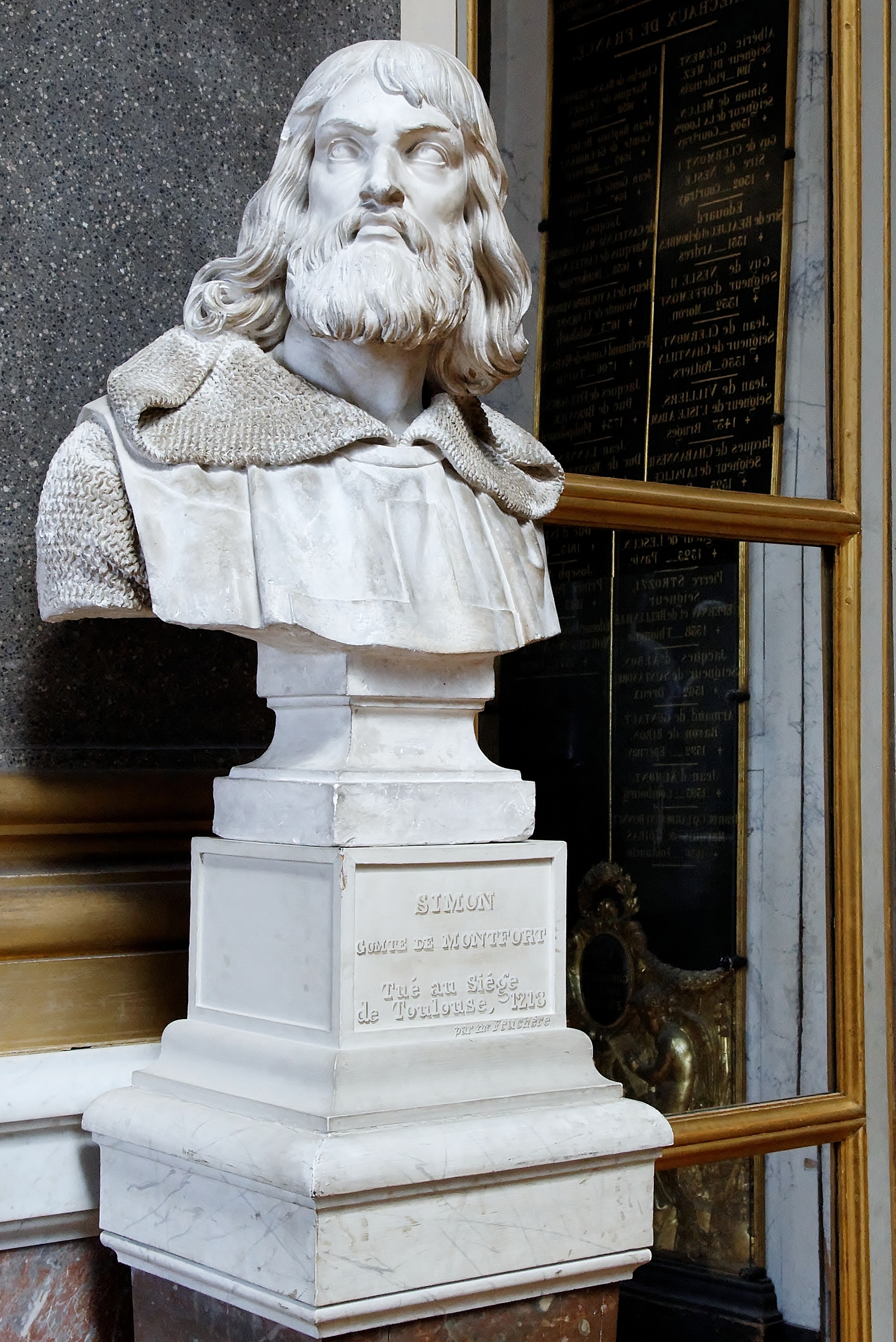
Simon IV de Montfort, 5th Earl of Leicester
Bust by Jean-Jacques Feuchere
Photo by Ray9
Courtesy Wikimedia Commons
The podcast was entitled The Fires of Languedoc:  The Cathar Crusade.  The guest writer identified the Cathars as a heretic sect of Christianity (they believed in dualism rather than monotheism) and identified the Cathar Crusade (also called the Albigensian Crusade) as a 20-year war in southern France between the Catholic and Cathar armies.  The Northern French army, backed by Paris and Rome and led by Simon de Montfort, fought the Southern French army, backed by the Cathars and led by Raymond VI of Toulouse.  The Cathars, during the crusade, had to choose between renouncing their beliefs and rejoining the Catholic Church, or fighting.  Most chose to fight.  Thousands died.  Following the war was an inquisition and destruction of Cathar writings until the sect was nearly stamped out about 100 years later.

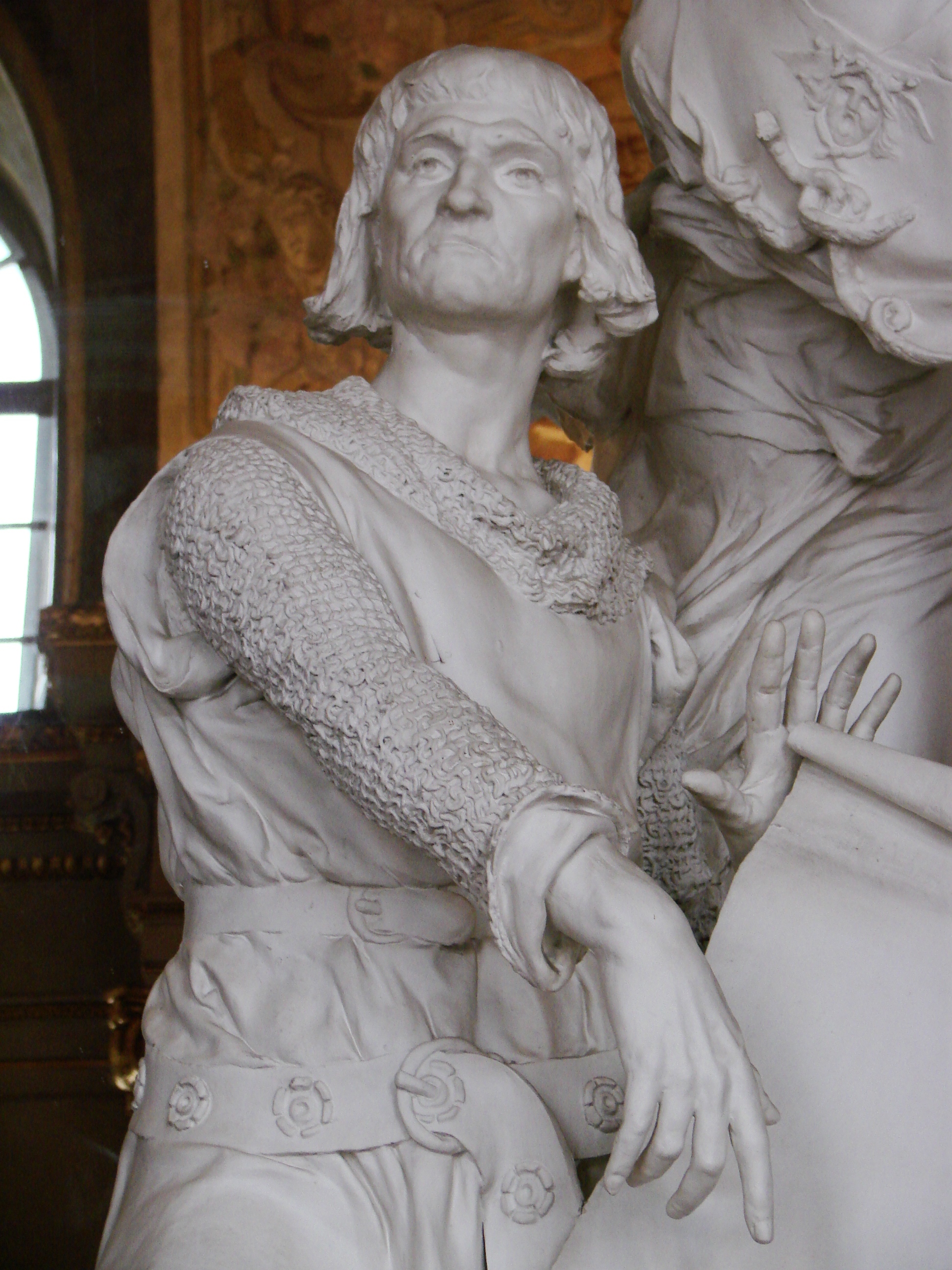
Raymond VI, Count of Toulous
Photo by Guerin Nicolas
Courtesy Wikimedia Commons

This is all true enough.  The question which follows is why did the Catholic Church label the Cathars to be heretics, and why was it so anxious to suppress the movement?  The podcast painted a picture of the Church that was less than flattering.  It displayed the Church as a fearful, power hungry organization that demanded complete control of medieval Europeans' faith and was willing to wipe out entire communities and cultures in order to maintain that control.  I don't doubt that power and politics influenced the decisions of the Church to call a crusade.  But they weren't the entire story.

The entire podcast was written from the point of view of the Cathars.  The writer pointed out several discrepancies  between Catholic and Cathar doctrine, always from the Cathar perspective.  Where was Rome's rebuttal?  It ought to have been included.  The writer also spent time discussing the Cathars' argument that the Languedoc region was, and ought to remain, independent from Paris.  Where was the French Crown's argument that Languedoc was, and had been, subject to the French King?  Again, this ought to have been included.

Further, historians ought not to make judgments on the events of the past based upon the values of the present. Medieval people did not always think like 21st century people, and it does them an injustice to be treated as if they did.  The podcast condemned the northern French armies for, among other things, not allowing the southern French people the freedom to worship as they pleased.  When governments today fail to offer their citizens freedom of conscience, we condemn them, and I believe rightfully so.  800 years ago, however, western Europeans did not have the idea of freedom of conscience.  Expecting them to behave as if they did have the idea is illogical.  Judging them for it is unfair.

I have addressed two forms of bias that can appear in a historical account:  failing to account for multiple points of view, and judging decisions made in the past using values of the present.  A good, unbiased account will do neither.  Then, after presenting the information in a clear, neutral manner, a historian will add their own analysis, thoughts, and opinions.  The readers, likewise, will be able to draw their own conclusions.